
Tourism and Ireland's EU Presidency
11 MARCH 2026
CONTEXT
From July 1st to December 31st of this year, Ireland will hold the Presidency of the Council of the European Union – a central leadership role at the heart of EU decision-making. For six months Ireland will guide negotiations, broker agreement between Member States, and help deliver EU laws and policies that affect the daily lives of more than 450 million people. The Irish Presidency of the EU will have a number of themes and the interests of business will be carefully monitored including the impact of the Presidency on Ireland's tourism industry, the country's largest indigenous industry and biggest regional employer.
This bulletin by the Irish Tourism Industry Confederation (ITIC) looks at the Presidency, the importance of tourism to the EU, European policy that will impact travel and hospitality, and the opportunity for Ireland to drive the tourism agenda forward. The Presidency presents the opportunity to put a distinct Irish imprint on Europe's work programme, ensuring that tourism issues are amplified and that future opportunities are maximised and challenges identified.
Groups of three member states holding successive presidencies work together closely as a 'trio', a system introduced since the Lisbon Treaty. The trio sets long-term goals and prepares a common agenda determining the topics and major issues that will be addressed by the Council over an 18-month period. Ireland is leading out on the EU Council Presidency Trio with Lithuania and Greece. As a result, an 18-month high-level work programme will be agreed in advance between the three countries. There is a unique opportunity to address the pre-conditions for long-term success in tourism and have these included in the work programme, namely governance, research and innovation, and financing. Such pre-conditions support the horizontal pillars identified in the Draghi Report and the goals of the Competitiveness Compass.
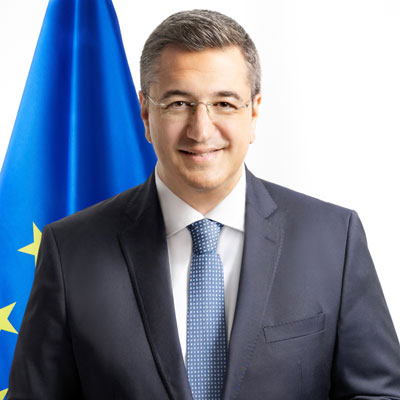
For the first time last year the EU created a directorate for tourism and Apostolos Tzitzikostas became Commissioner for Sustainable Transport and Tourism. His task is deliver a resilient and competitive tourism sector, in line with the EU Agenda for Tourism 2030 and the first European Sustainable Tourism strategy is due to be published by the summer.
Tourism is estimated at providing 12.5% of all jobs across the EU and is valued at €618 billion annually. Tourism matters to the EU and the EU matters to tourism.
TOURISM VALUE TO THE EU
Tourism matters to all 27 members of the European Union, whether that's from the perspective of citizens, businesses or governments.
The act of being a tourist can create lasting memories, bolster wellbeing and foster an understanding of the history, culture and lifestyle that define another country. Visitor economy businesses create job opportunities, demand for all manner of goods and services, and significant tax revenues. Governments, and the European Commission interact and intervene in ways that impact consumers and corporations, but equally recognise the need to steer tourism towards a future that is sustainable, not just financially, but equally for the environment and the communities in which it takes place. Tourism can act as a tool of soft power as well as an engine of economic growth, helping to showcase the many and varied stories and traditions embedded within EU nations.
There are a raft of metrics that help paint a picture of how important tourism is to the EU, with the latest World Travel and Tourism Council (WTTC) analysis suggesting that in 2025 travel and tourism across the bloc will have likely contributed €1.9 trillion in GDP. Any number of that magnitude is difficult to assess, but to put it in context it represents 10.5% of the EU economy.
In relative terms travel and tourism is even more important to employment across the EU than its GDP according to WTTC, underpinning 26 million, or 12.5% of all EU jobs last year.

With the exception of the calamitous impacts of the Covid-19 pandemic tourism has tended to be an economic sector that the EU can rely on for growth, and WTTC projections suggest that it is a sector that will grow at an annual rate of 1.8% over the next decade, well ahead of the forecast 1.3% annual growth for the EU economy overall. Meanwhile the sector has the potential to generate an extra 4.5 million jobs by the mid 2030s, or one-in-seven jobs.
While there is variation across the EU, many governments are cash-strapped, facing a range of economic and demographic challenges. Tax revenue courtesy of travel and tourism is of considerable importance today, and WTTC estimate that across the EU this could climb to €900 billion in the years ahead.
The most recent stats covering the volume and value of overnight tourism undertaken by EU residents are for 2024 and it is worth taking a look at these Eurostat figures as they reveal EU citizens spent a hefty €618 billion that year.
The following chart shows that more than seven-in-ten overnight trips were domestic as opposed to foreign in 2024, but that this proportion falls to 42% when focussing on expenditure. Just over one-fifth of trips in 2024 were to another country that was part of the EU, with these destinations accounting for close to one-third of expenditure.
The EU is more heterogeneous than homogeneous when it comes to what is on offer to the potential visitor but the same holds true in terms of tourism expenditure by its citizens. The following table shows for each EU member, as well as the bloc overall, the composition of overnight tourism expenditure in 2024 in terms of domestic and foreign and for short (1-3 night) or longer (4+ night) trips.
The countries with the highest share of expenditure that is domestic as opposed to foreign are Romania, Greece, Spain, France and Italy, whereas those with the highest share of expenditure on foreign trips are Luxembourg, Belgium, Malta, Cyprus and Latvia. Ireland has the 9th highest share of expenditure that is on foreign trips.
The following chart shows that more than seven-in-ten overnight trips were domestic as opposed to foreign in 2024, but that this proportion falls to 42% when focusing on expenditure. Just over one-fifth of trips in 2024 were to another country that was part of the EU, with these destinations accounting for close to one-third of expenditure.

The EU is more heterogeneous than homogeneous when it comes to what is on offer to the potential visitor but the same holds true in terms of tourism expenditure by its citizens.
The following table shows for each EU member, as well as the bloc overall, the composition of overnight tourism expenditure in 2024 in terms of domestic and foreign and for short (1-3 night) or longer (4+ night) trips.
The countries with the highest share of expenditure that is domestic as opposed to foreign are Romania, Greece, Spain, France and Italy, whereas those with the highest share of expenditure on foreign trips are Luxembourg, Belgium, Malta, Cyprus and Latvia. Ireland has the 9th highest share of expenditure that is on foreign trips.

What is also of interest is the considerable variance in how much EU residents tended to spend per trip and per night in 2024, with the following table revealing that those from Sweden, Luxembourg, Austria, Germany and Cyprus topped the table for spend per trip when travelling abroad, while for spend per night on foreign trips the leading quintet were Luxembourg, Austria, Estonia, France and Sweden. Residents of Ireland were in 15th spot in terms of spend per foreign trip but 7th when looking at spend per night.

EU POLICY
The EU declares that it "supports, coordinates and complements" the actions of EU countries related to tourism. One of the strands of tourism-related policy is to help maintain the bloc's position as one of the most visited regions by international travellers, with provisional stats from UN Tourism indicating that in 2025 38% of all international tourist arrivals were accounted for by the EU27 nations, with a tally of 582.6 million.
Taking an historical perspective across recent decades the European continent has certainly witness growth in the volume and value of international tourism, but it's global share has been gently declining. The primary reason for this is that it is in parts of Asia and the Middle East that growth in income has made international travel possible to millions for the first time, and one of the great truisms of international tourism is that it is mostly inter-regional as opposed to intra-regional. That means it is destinations within Asia and the Middle East that have seen some of the swiftest growth in arrivals and expenditure.
It is arguably easier to set out overarching goals than to implement the necessary policies to accomplish those goals, but the EU seeks to maximise the contribution that tourism can make to economic growth and job creation, but also to ensure that Europe strives to have a sustainable tourism sector, both in relation to the environment and socially. Unsurprisingly a further strand of EU tourism policy is to encourage cooperation between members and to improve the attractiveness of the destination to both internal and external visitors.
At the end of 2022 the Council of the EU adopted what it termed the European agenda for tourism 2030, with this being based on its earlier tome "Transition Pathway for Tourism", a report that identified no fewer than 27 areas or measures that it believed would underpin a "green and digital transition" for the sector, and bolster the resilience of the sector to deal with crises and a changing world.
Multimodal ticketing and travellers rights was one of the topics identified, based on the recognition that very many tourism journeys entail the use of more than one form of transport and/or transport provided by multiple companies. While online bookings and downloadable e-tickets may make travel simpler there can be frustrations for travellers if a hiccup impacting one part of their journey then invalidates tickets which they may have purchased from a different retailer.
There is something of a balancing act that the EU has to undertake, as actions it may propose to champion consumer rights can on occasion result in consternation among businesses who argue that regulations will make them less not more competitive.
A prime example of this at present relates to the EU's plans to overhaul air passenger rights, with one idea being to set a minimum standard for the amount of cabin baggage that passengers are permitted to carry. Airlines and the organisations that represent them argue that this would be operationally burdensome, adding to the time it takes for passengers to board and disembark and potentially making flights heavier and thereby resulting in greater emissions.
Airlines are keenest for the EU to focus on the modernisation of Air Traffic Control systems, and to tackle frequent periods of ATC disruption due either to industrial action or staff shortages.

The EU Package Travel Directive is another strand of EU activity that can result in businesses getting a touch hot under the collar. The EU has been seeking to strengthen travellers' rights further at present, whether that relates to travel disruption, cancellations or tour operator insolvencies. However, it now appears that some of the proposed changes that were leading to the greatest concern will not feature in the revised Package Travel Directive, a stance welcomed by the European Travel Agents and Tour Operators Association.
The levying of VAT is an issue on which the EU has a role, and for the hospitality sector it offers the flexibility for each member state to apply a reduced rate on tourist-related services such as hotel accommodation and restaurant meals, subject to a minimum rate of 5%.
Another topic identified within the "Transition Pathway" with salience in Ireland is that of workforce skills. A perennial challenge for the sector is being able to recruit and retain staff, with misperceptions as to the worth of a job within the sector often prevalent. It is argued by the EU that there is a need to ensure the skills profile of those workers needed in the future are embedded in policy and vocational education and training.
It is apposite to note that at the time the EU was highlighting this there was little realisation as to how urgent a need would emerge within just a few years for the sector to have access to those qualified to figure out how best it could take advantage of AI.
There is the potential for AI to be a tool that can help in another of the EU's goals, namely to improve the online availability of validated information relating to how accessible a destination, and the tourism businesses that operate therein, is to those with a range of physical, sensory or cognitive conditions. As a growing proportion of the EU population falls within older cohorts the need for this type of information will only grow. Another sphere of information dissemination that requires a coherent as opposed to scattergun approach is that on the sustainability credentials of both tourism businesses and destinations more broadly.
One idea noted was that the Erasmus+ programme could promote partnerships between universities and vocational education institutions to develop tourism curricula that meet the skills needs of the coming years.
The field of tourism statistics represents a veritable maze of definitions and varied methodologies being deployed for collection, and perhaps as a result, dubious comparisons masquerading as insights. It is no surprise that the EU has identified improving statistics and indicators for tourism as a priority. This goes well beyond the need to have estimates for the volume and value of tourism that are comparable across different destinations, encompassing how best to measure and report on topics such as the economic and social impact of tourism as well as its environmental sustainability.
Learning from the successes and setbacks faced by those dealing with tourism statistics across the EU can underpin progress which is why the establishment of collaborative and data driven destination management models earned its place in the EU Transition Pathway.
An area of tourism policy that will be very much on the mind of those charged with managing the day-to-day flow of international visitors in the next year is the full implementation of the EU's Entry Exit Scheme, and in theory by this autumn the European Travel Information and Authorisation System ETIAS). However, with Ireland being one of just two EU members not part of the Schengen Zone (the other being Cyprus), any impacts will be indirect. There is something of a cost competitiveness advantage for Ireland, with, for example, those from North America visiting Schengen countries needing to apply for an ETIAS (€20) from late this year, while those wanting to visit the UK needing an Electronic Travel Authorisation (£20).
CONCLUSION
There has never been a more opportune time or backdrop to 'politically' advance the tourism sector within EU conversations. In addition to the appointment of a dedicated Tourism Commissioner, a new EU tourism strategy will be launched this year, negotiations on the EU's next long-term budget (the MFF 2028-2034) are ongoing, and the United Nations has declared 2027 as the International Year of Sustainable and Resilient Tourism.
Renowned forecasters, Tourism Economics, estimate that by the end of Ireland's Presidency of the Council of the European Union on 31st December the bloc will have welcomed 5.2% more inbound visitors than had been the case during the previous twelve months, although the projection for countries across Northern Europe (including Ireland) is a slightly more modest uptick of 4.6%. In parallel Ireland has a new national tourism policy which has set ambitious revenue goals out to 2030.
The Irish Presidency of the EU is an opportunity to identify strategic opportunities and challenges facing tourism at home as well as across the continent. The last time Ireland held the Presidency of the EU was 2013 and, with an enlarged bloc, this opportunity won't come around again for many years.
ITIC's conference on October 1st in the Convention Centre Dublin will have a strong European theme and will push for a tourism budget at European level commensurate with the importance of the sector across the continent. It will be followed in November by the European Tourism Forum to be held in Mullingar, a gathering of Government officials and stakeholders. The EU's importance to Irish tourism has become more pronounced our need to market-diversify and in light of the Middle East turmoil that besets the world currently. Let's not waste this opportunity.